
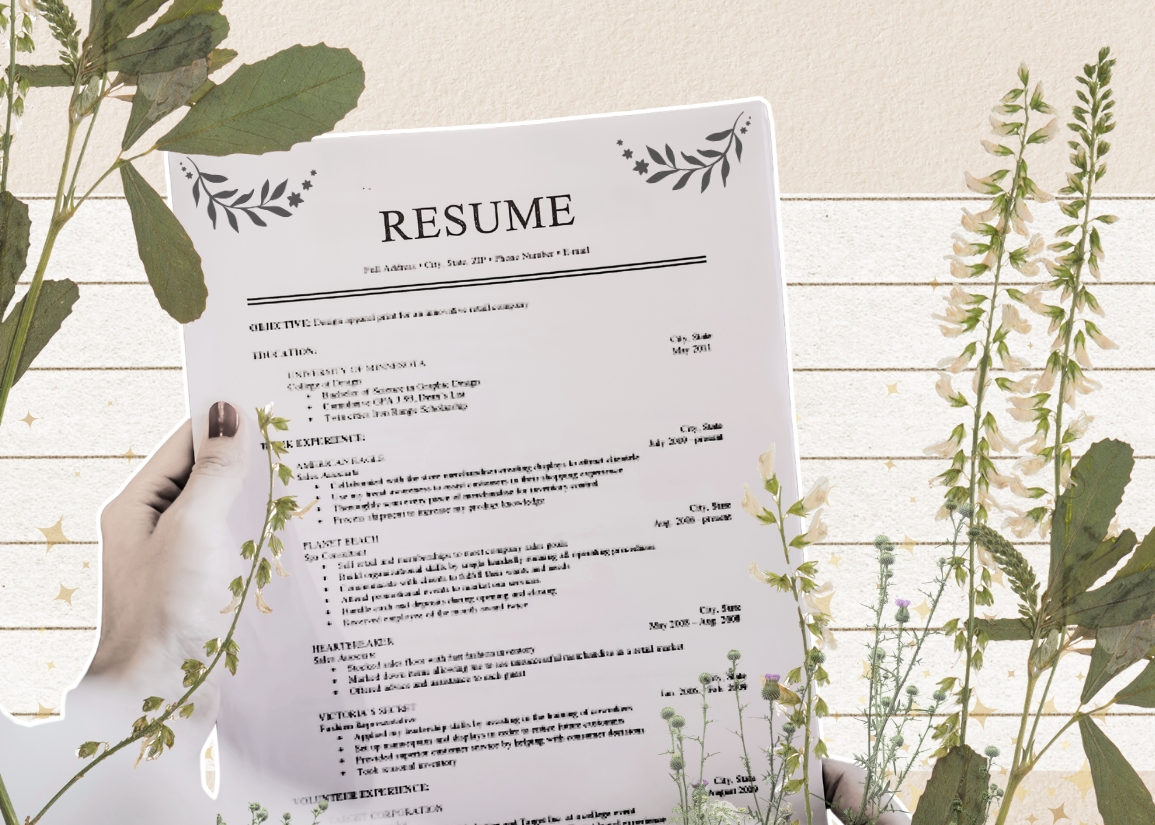
If you search “witchcraft for job hunting” online, you’ll find hundreds of variations of this: print your resume, put it on your altar, anoint it with money oil, burn a green candle.
I’m not here to knock candle magic. I’m a witch. I love a good candle spell. But important context for the witchy internet is that the key to making spells like that work is that you need to already know what you want. Like, specifically.
And, I mean… Do you?
Because when I was drowning in my own career transitions — I’ve changed industries and careers multiple times, faced a maternity discrimination case, and was questioning everything I thought I knew about professional success just as I began my MBA — I needed so much more than a candle spell. What I needed was to figure out who the hell I was becoming. And how to get out of my own way.
That’s the piece I want to teach you. The witchy internet is full of spells to get a job but almost entirely silent on the deeper question: What kind of work is worthy of your one life?
So let’s move away from the idea of manifesting a job for a moment. (We’ll get back to that, I promise!) Instead, let’s start by looking at career design — and how to make it one of the most powerful spiritual practices you can undertake.
Your Job Search Is a Liminal Passage (and That’s Why it Hurts)
The reason your career transition feels so disorienting isn’t because you’re doing anything wrong or because you’re unqualified for the opportunities you’re seeking. It’s a really tough and often dehumanizing job market. But even more than that, seeking out a new role means you’re in a liminal space — a threshold between who you were and who you’re becoming.
I work a lot with Ancient Egyptian wisdom teachings precisely because they understood transitions so well. Their entire cosmology was built around the principle that death is a passage. Every sunset contains the promise of a sunrise. Every ending is an initiation into what’s coming next.
You’ve probably seen a documentary or two about how the Ancient Egyptians prepared for the afterlife. Their tombs were packed to the brim with supplies: their favorite household luxuries, their best chariot. But the construction of the tomb itself was also a deeply spiritual practice of reckoning with who they had been in life, what they valued, and what they wanted their legacy to be. The weighing of the heart against the feather of Ma’at was an alignment check. Does your heart match your truth?
Your career transition, as a marker of a new chapter in your own life, isn’t too far from this.
Because you’re not just between jobs, are you? You’re between identities. You’re between selves. You’re between purposes, groups of people you see every day, and routines. The person who accepted that role three years ago, who tolerated that toxic culture, or who shrank herself to fit that box or was a standout who excelled in that team — that person is being laid to rest. And the person you’re becoming hasn’t fully arrived yet. You’re authoring that chapter now.
In-between spaces are sacred. And they’re also pretty terrifying.
Any advice you receive about manifesting a new job — magical or mundane — must honestly look at this messy middle. It can’t be solved with a five-step process, a single mantra, or that single candle spell. But if you can sit with the liminal and actually do the inner work, you won’t just find a new job. You’ll find yourself. And from that place, the right work might even find you.

Why Most “Manifest a Job” Advice Misses the Point
Before I share 10 witchy practices with you, let me clarify a bit about what I mean when I say “manifest.” It’s a hot term and I’m sure most of us have a slightly different take on how we’d define it.
Here’s what I mean: to manifest is to bring consciousness, intention, magical savvy, and strategic wisdom to the entire process of your goal. In this case, finding and pursuing meaningful work.
Most people approach the job search in a dissociated state. They’re Easy Applying without a thought. They’re writing cover letters (or having AI do it for them) as if from outside their own body, performing a version of themselves that they think will be palatable, trying to decode what “they” want to hear. (Especially with those pesky “personality assessments.”)
This is the opposite of magic.
Real career manifestation means staying connected to yourself while translating your gifts into someone else’s language. It means knowing your story so thoroughly that no amount of ATS filtering or ghosting can make you forget it. It means approaching the entire process as a creative, strategic, and — yes — sacred act.
What follows are ten ways to weave that enchantment into the tangible materials and actions of your job search — your resume, your LinkedIn, your interview presence, your entire professional identity. These aren’t borrowed from any closed tradition. They come from my own practice: nearly 20 years of witchery, a decade of working with Ancient Egyptian wisdom, and a winding career that includes multiple industry changes, building products, leading teams, and earning an MBA while running a business across three countries.
They’ve gotten me (and my clients) into empowered mindsets that traditional career advice alone doesn’t offer.
Let’s go.

1. Write a Petition Letter You Never Send
One of my favorite tips is simply bringing your resume to your altar for anointment and enchantment. While I think this can be effective at strengthening your connection to your resume — it doesn’t help us get over the intention-making hurdle of knowing what you actually want.
That’s where most of us get stuck, and it’s also what magic needs to be truly effective. We’re so busy trying to decode what hiring managers want to hear (or AI-driven ATS systems are actually looking for) that we forget to ask ourselves what we’re genuinely calling in.
Instead of taking your resume to the witchy altar, I want you to write a letter to the role you want, as if it’s an entity. Not in a cover letter style. Aim for something closer to a love letter, or an invocation, that authentically writes to the kind of work you truly want to be doing.
How to do it:
Set aside 20–30 minutes with your journal, a candle if you like one, and no distractions. Start writing to the role you’re calling in. To the work itself.
Describe who you’ll be when you arrive. Go deeper than your ideal job title — meditate on your energy. What does your morning look like? How do you feel when you sit down to work? What problems are you solving that actually excite you? What are the people around you like?
Describe what you’ll bring. Your skills, yes, but also your gift for conversation or systems or remembering birthdays. The thing you do that nobody else does the way you do it. The perspective you carry from every weird and winding experience that brought you here.
Describe how the work will feel. What does it feel like in your body to do work that’s aligned? If you’ve ever had a moment like that — even a flash of it — write from that place.
What to do with it:
This letter stays in your journal or on your altar. You don’t need to re-read it, but doing so occasionally can anchor you. You might also observe that your ideal role changes as you learn more about yourself during the job search. Update it if you feel called.
The act of writing it is the spell — you’ve clarified your desire in your own language before anyone else’s requirements get involved. The energy of having written it then infuses the actual cover letters you do send. You’ll notice the difference: your outward-facing writing will have a spine to it, a warmth, a specificity that comes from having already told the truth to yourself.

2. Anoint Your Hands Before Typing
If you’ve tried sanctifying resumes and anointing candles with oil, it’s time to shift focus back to your body. And in the job search, your hands are where your intention shows up — because everything you write, every application you submit, passes through them.
I know that sounds simple. It is simple. That’s the point.
How to do it:
Before you sit down to write applications or send outreach emails, take a single drop of oil and rub it between your palms. This can be a drop of olive oil, or a drop of something that smells like you, or a magical oil you’ve made or acquired from a fellow witch. We’re not necessarily using money oil here — try something that connects you to your own body and power.
As you rub it in, set an intention for what your hands are about to do. Not “get me hired” — something truer. Something like: My words carry my full self. I write from clarity and courage. What I offer is real.
To avoid your keyboard getting icky, I recommend focusing the oil on the tops of your hands and knuckles.
If you’re working through a particular block — self-worth, fear of rejection, imposter syndrome — you can choose a scent or oil associated with what you’re calling in rather than what you’re pushing against. Rosemary for remembering your power. Bergamot for confidence.
Why this works:
Your hands are wielding the wand of your keyboard. This small ritual shifts you from mechanical output mode to intentional creation mode before a single word is typed.
It also creates a sensory anchor. Over time, the smell and the feeling of the oil on your hands will signal to your brain: we’re doing something that’s part of a wider intention. Show up grounded and focused.

3. Pull a Tarot Card Before Applications
This one is quick, low-effort, and high-insight — and it fundamentally changes your relationship with the application process.
This is the practice I use the most, both for myself and when I’m supporting clients. It helps to turn a soul-crushing numbers game into a genuine conversation with my intuition. And I’ve been doing this long enough to know that when I listen to that conversation, I end up somewhere better than when I don’t.
How to do it:
Before you submit an application, pull a single card. Don’t ask “Will I get this job?” That puts your power outside yourself.
Instead, ask something like:
- What do I need to know about this opportunity?
- What part of myself does this role call forward?
- What should I pay attention to here?
Sit with the card for a minute. Let it inform your energy as you tailor your materials. Maybe The Tower tells you this company is about to go through massive upheaval — useful information for your interview questions. Maybe The Star reminds you this is a role where you can genuinely shine. Maybe the Five of Cups suggests you’re applying from grief rather than genuine desire, and you need to pause.
Why this works:
Each application stops being a mechanical submission — a fire-and-forget numbers game — and becomes a conversation with your deeper knowing. Over the course of a job search, you’ll start to notice patterns in the cards that reveal what your deeper self actually wants, which is often different from what your anxious mind is chasing.
You’re also building a record. Keep a quick note of each pull: the role, the card, your gut response. When an offer eventually comes, you can look back at the entire journey and see the thread.
If you’re someone who keeps a spreadsheet to track your application process, this could be a useful field.
Also, I want to take the pressure off of you to do this for EVERY job listing. That would be… a lot. If you’re doing an evening of LinkedIn Easy Apply applications, maybe pull one or two cards before the session. But I do think that anytime you find a job listing that actually sparks your interest, you should grab your deck for a quick one-card pull.
If you don’t work with Tarot, any divination tool works — oracle cards, runes, even flipping a coin and noticing your emotional reaction to the result.

4. Create a Monogram Sigil for Your Personal Brand
A sigil is a symbol charged with intention. We tuck them under pillows, carve them into candles, burn them on paper into ash, or bury them in the yard.
But there’s another tradition of sigil work that’s incredibly powerful for career magic: the sigil that hides in plain sight.
Monograms have been used for centuries as marks of identity and authority. Royal seals, family crests, designer logos. The history of the monogram is, whether people realize it or not, a history of visible sigil work — a symbol that says this belongs to me, this came from me, this carries my power.
You’re going to create one for your professional identity.
How to do it:
Get out your pencil, open up Canva or another editor (Google Docs works just fine), and take your initials and play with them. If you’re drawing by hand, have a blast. If you’re not artistically inclined, play with your initials across different fonts. Overlap them, intertwine them, stylize them. You’re not trying to make a corporate logo. You’re creating a personal symbol that you’ve charged with intention.
As you design it, hold in mind what you want your professional presence to communicate. Authority? Warmth? Precision? Creativity? Let those qualities shape how the letters interact.
The best part of this practice is that monograms are totally normalized. No one has to know it comes with magic.
To add the magic: once you have a design you love, charge it. Hold it in your hands. Speak your professional intention over it. This is your mark. Your seal. One of my favorite ways to charge sigils like these is to print them out or draw them, then trace them it with my finger (or a wand) a few times while thinking about the impression you want it to leave. You can do this every so often.
If you’re not savvy with design tools but made something you love, you can always get your sketch or idea professionally upgraded by a designer — the magic is in the intention you set during the creation, not the production quality of the final image.
Where to use it:
Put it on your resume header. Use it in your LinkedIn profile banner. Include it in your email signature. Print it on your business cards if you use them (we still do here in Japan!).
Every time someone sees your application materials, they’re encountering your charged symbol. It’s functioning exactly the way monograms have always functioned — as a declaration of identity. Yours just happens to be intentionally enchanted.

5. Embed a Hidden Sigil in Your Resume
Okay, this one is for the witches who like their magic a little more covert and don’t mind a tiny bit of ATS risk. It’s one of my favorites because it lives at the exact intersection of strategic and mystical that I find myself obsessing over.
You’ve probably heard the old tip to keyword-stuff your resume with white text in the footer to get through ATS systems. Well, unfortunately, that tip has run its course. Most modern ATS systems will detect white text keyword stuffing and either flag your application as spam or strip that text out entirely. Gone are the days where you could game the system like that.
But in the spirit of white on white — we’re going to do something different.
How to do it:
First, create your sigil. You can do this the old-fashioned way: write out your intention as a sentence (“I am thriving in a role that values my strategic mind and creative spirit”), cross out the repeating letters, and arrange what remains into an abstract symbol. Or use any sigil method that resonates with you.
Now, open your resume in Google Docs, and use Insert > Drawing. Draw your sigil using the drawing tools, and set the color to white.
Add it to the footer of your document (you MUST double click to access it!) and make sure you adjust the settings so it’s formatted to go behind the text.
A quick note: you might be tempted to use the Watermark feature in Google Docs, but watermarks often create a global background layer that washes out your resume in certain PDF scanners. They’re frequently encoded as a repeating background in the PDF’s XML, and with older ATS systems, you could end up actually handing the recruiter a blank page. Not the vibe.
The drawing method in the footer is localized. You’re putting it in a section that most ATS systems are programmed to either ignore or treat as a separate metadata field. So you’re not competing for space with your crucial bullet points about your experience and suitability for the role.
Test it before you send:
Open the exported PDF and Select All (Ctrl + A or Cmd + A). If the text highlights normally, you’re good. If not, you need to adjust your sigil drawing by placing it further away from the text or making it smaller.
Every copy of this resume now carries your charged intention. No hiring manager, no ATS system, no recruiter is going to see it. It’s for you and the universe, babe! 𖦹
You might find it meaningful to create a new sigil for each major application if you’re targeting just a few companies, and tailoring the intention to the specific role. Or you might prefer one overarching sigil for the entire search. Both work.

6. Turn Your File Name Into a Declaration
Stop naming your resume “Resume_Final_2.pdf.”
Seriously. Stop it right now.
I know this seems like a small thing — and maybe that’s exactly why most people don’t think about it. But being a witch is all about reclaiming agency in the smallest gestures. And right now, you’re wasting a witchy opportunity on the very first thing a recruiter (or an ATS) encounters about you: your file name.
Most of us have experienced the horrors of recruitment systems and job portals. It’s easy to feel like a total cog in the machine when you hit upload and hope the algorithm doesn’t do you dirty. So we’re going to reclaim some of that agency by treating your digital file as a vessel for intention.
Here are a few ways to make the file name work harder for you:
Name your file as if the role has already arrived. For example, I might name mine “Bree — Head of Product for Audible.pdf.” This signals the destination — clearly, plainly — that you want your application to lead to. It also has the practical benefit of making your file instantly identifiable when a recruiter downloads 200 resumes into the same folder.
Or, name it with keywords that signal exactly who you are and what you bring: “Bree — Growth Marketing & Strategy.pdf.”
Go deeper on metadata magic:
If you want to keep your file name classic — “Bree — Resume.pdf” — you can still work with the file’s metadata. Use a PDF editor (Adobe Acrobat, Preview on Mac, or free tools like PDF Candy) to edit the Title and Author fields.
For example: Title — “Bree — Strategic Leadership and Value Creation.” This puts your intentions for leadership and value straight into the metadata, acting as both energetic and literal beacons for the system. Most people will never see this. But the file carries it everywhere it goes.

7. Cleanse Your Resume Before a New Chapter
A key component of any magical or spiritual practice is regular cleansing of the energy of our most sacred objects, our home, and ourselves. Your resume shouldn’t be any different.
I know this might sound a little woo for a Google Doc, but hear me out. Think about how much frustrated, anxious, rejection-soaked energy is sitting in that file. Every panicked late-night edit. Every time you rewrote your summary for a role you didn’t even want. Every time you stopped applying for new roles because one looked promising, just to lose the offer in the 5th f*cking interview round. That energy accumulates — and it shapes how you feel every time you open the file.
Before adding new energy for this round of your job search, clear the digital clutter.
A quick cleanse:
In Google Docs, go to File > Version History > Name Current Version. Name it something fresh. I might call mine something like “Base of Potential” or “Season 2” or “Clean Slate.” This is you drawing a line. Everything before this version belongs to a different chapter.
For a deeper cleanse:
Create a whole new document and rewrite your resume, word for word. Yes, this takes time. It’s best done with a cup of tea, some music you love, a candle lit, and maybe a clean glass of water nearby to catch any negativity as you line-edit.
Sounds like a ritual, I know. That’s because it is one.
As you’re rewriting, you can sense how aligned each word, bullet point, and positioning statement is with the story you’re trying to tell about yourself now. Not last year. Not during that toxic job. Now.
I know that when I actually read back over a resume that’s more than two or three months old, it fits like a bad shoe. I know I wore it once, but something’s off. The language doesn’t sound like me anymore. The priorities have shifted. And sometimes the things I was proudest of three months ago are the things I’d not prioritize mentioning right now.
And while you’re at it:
If you’ve been at this for a while, your computer is probably full of old resume PDFs from previous rounds. This is your permission to get rid of them. Delete them or compress them into a zip file if you think they might be valuable later — and don’t forget to do the same to your LinkedIn saved resumes. You don’t need to carry every version of yourself forward. Some of them have served their purpose.

8. Enchant Your Interview Clothes
Your interview outfit is armor. Let’s enchant it accordingly.
This practice is older than any of us. Soldiers have sewn protective symbols into their uniforms for millennia. Sailors carried charms. Midwives wore amulets. The idea that what you wear can carry intention and protection is one of the most universal magical practices in human history.
I keep an Isis Throne hieroglyph — 𓊨 — on the tags of my interview suits and blazers. Isis as the Throne: the seat of power, the foundation from which kings ruled. It’s my reminder that I am the seat of my own authority.
(I just really love that image. Sitting in a waiting room, nervous as hell, and then I touch my collar and remember: oh right. I’m that witch.)
How to do it:
Choose a symbol that means something to you. It could be a hieroglyph, a rune, a personal sigil, your monogram from Practice 4, or a symbol you’ve developed in your own practice.
Draw it on the inside tag of your interview clothes with a fabric marker. Or embroider it if you’re handy. Some people tuck a small charm or stone into an inner pocket — tiger’s eye for confidence, clear quartz for clarity, sunstone for radiance.
The key is that it’s on your body when you walk into the room. You know it’s there. They don’t. And every time you feel your confidence wobble, you can touch your collar or your cuff and remember: I am carrying my own magic into this room.
I don’t recommend keeping your sigil in your pocket. It might cause you to unintentionally put your hands in your pockets during an interview. While this isn’t bad, the body language can sometimes look less confident. Try to go with the tag on the inside of your jacket instead.
The same goes for virtual interviews: wear the enchanted blazer or button shirt!

9. Build an Enchanted Network: Relationship-Building as Energy Work
This practice might be the most important one. And I know — I know — that “networking” makes most people want to crawl under their desk and never come out. I get it. The word itself feels transactional and gross. I ALSO hated it.
But here’s the reframe that worked for me, and might work for you too: networking is energy work. Full stop.
When you reach out to someone — a former colleague, a hiring manager, a connection of a connection — you are initiating an energetic exchange. Most people approach networking from a place of scarcity (I need something from you), which is why it feels so desperate and performative.
What if you approached it instead as an offering? What if you thought of it as moving energy through an ecosystem?
How to do it:
Before you send that LinkedIn message or that coffee-chat request, take a moment to ground. Ask yourself: What can I genuinely offer this person?
Maybe it’s your attention. Maybe it’s a perspective they haven’t heard. Maybe it’s a memory of a shared experience. Maybe it’s enthusiasm that’s infectious. Maybe it’s simply the gift of being someone who actually listens — which, in a world of people performing busyness, is more rare and more valuable than you think.
Craft your outreach from that place. Not from “I’m looking for a role in your company” but from “I’ve been thinking about this thing you mentioned, and here’s what it sparked for me.” Or even, “I saw you’ve [moved / had a baby / spoke at a conference / started a Substack] and wanted to say congratulations! Would love to catch up and hear more about what’s going on with you lately. Are you free anytime in the next couple weeks?“
I’m not saying don’t ask for help. You absolutely should. But lead with connection. Lead with genuine curiosity about the other person. The energy of that approach is different, and people feel it — even through a screen, even in a DM.
Why this works beyond the obvious:
You don’t have to see your network as a resource to extract from. You can see it through a magical lens: a living web of energy, reciprocity, and possibility between humans who form and dissolve collectives continuously. Your job search becomes less lonely. Your sense of your own value gets reinforced by real human interactions rather than eroded by the silence of ATS systems. And the opportunities that come through warm connections are almost always better than the ones that come through cold applications.

10. Treat the Application Process as a Ritual
This is the practice that holds all the others together. It’s less of a technique and more of an orientation — a way of being throughout your entire job search.
Most people apply for jobs the way they scroll through social media: mindlessly, compulsively, hoping that sheer volume will eventually produce a result. Easy Apply. Submit. Forget. Repeat. I literally do this every couple months when I’m bored: I just shoot off 5 or 6 Easy Apply applications for a few part-time remote jobs to “see what happens.” (Unsurprisingly, not much.)
The dissociation is real, and it’s understandable — because job searching is one of the most vulnerable, emotionally brutal things we do as adults, and numbing out feels like self-preservation.
But it’s the opposite of magic. And I think deep down, you know that.
What if instead, you approached each application cycle as a small ritual? Not an elaborate one — you don’t need to cast a circle every time you hit submit. But you could make a practice that grounds you as much as it boundaries you. A 30 second, closed-eyes pause before you open your computer. Lighting a candle while applying, or taking three breaths before each submission. Touching or drawing your sigil in your notebook.
You could read the job description as if it’s a letter written to you, and notice how your body responds. Does it light up? Contract? Feel prophetic, or feel like nothing?
You could write your cover letters from the energy of your petition letter — the one you wrote for yourself first — rather than trying to decode what the hiring manager wants to hear.
You could pull a card. Anoint your hands. Check in with yourself halfway through and ask: am I still here? Am I still connected to what I’m saying?
The difference between a mindless application and a ritualized one isn’t the outcome (though I’d argue the outcomes improve significantly). It’s who you are throughout the process. The traditional approach of spray & pray slowly erodes your sense of self. The other, this grounded but witchy one, builds it even with every submission.

The Deepest Magic is Who You Are Becoming
What I want you to take away from these 10 practices is not, “Go do all of these and you’re set.”
You might choose one or two that work for you, or craft your own! The idea is that the materials of your job search are interchangeable with how you use raw materials of your magic. Magic is all about working from and with your intentions. And a job search is a pretty major intention that deserves enchantment.
Your resume is a declaration of who you’ve been and who you’re becoming. Your cover letter is a story you’re weaving about your future. Your LinkedIn profile is a living altar where your professional identity exists in public. And your network is a web of energy, reciprocity, and possibility.
Every one of these touchpoints is an opportunity for magic-making.
You don’t need expensive supplies or elaborate rituals. The suggestions I made above are meant to be accessible — you just need to show up with presence, creativity, and the willingness to bring your whole self (strategic mind and magical spirit!!).
My favorite symbolism to meditate on comes from Ancient Egyptian mythology. They built their entire understanding of the afterlife around a pivotal moment: when your heart would be weighed against a feather. The feather is the feather of Ma’at — ultimate truth. To progress into a peaceful afterlife, your heart must answer the questions: Had you lived in alignment? Have you been kind and just?
I think about that image every time I’m in doubt about what to do next. I can imagine my heart and a feather, side by side, and reflect on what it means to be real and weightless.
Whether you realize it or not, I think this is the question underneath your job search too.
Because you are not your job title. You are not a single role. You are not the status that role affords you or the salary attached to it.
You are a member of a family. A member of a community. A member of collectives — companies, organizations, creative circles — that you choose and that choose you. You are someone whose heart beats for specific things. Whose mind drifts, in quiet moments, toward particular kinds of meaning and fulfillment and purpose.
Who are you, in that context?
A big part of resilience in the job search comes from being in deep contact with that part of yourself. Loving yourself and your story not as a professional asset but as a whole person. Knowing what you can and can’t do, what you want to do and refuse to do. Having boundaries and goals that exist because you chose them, not because a role demanded them.
So, as you move on from this blog post and back into the marathon of job hunting, be well rested and healthy. Do acts of service and acts of creativity. Make room for laughter and dance alongside hard work and the unglamorous tidying up of your life.
Your career transition is your opportunity to reset your alignment and connection to that inner self.
And from that place, maybe the right work will do more than manifest. It’ll arrive, and recognize you.
If you’re in the middle of a career transition and want to go deeper with this work, I also wrote about the foundational practices of word witchery, candle magic, energy work, and dreamwork for surviving the job search in The Sea Witch’s Guide to the Job Hunt →.
And if you want these kinds of tools and insights delivered straight to your inbox, with writing prompts each month to get you back in touch with YOU, join Enchanted Ambitions! It’s my monthly newsletter for professional, spiritual, magical, badass people like you who are ready to transform their work and the world.

Love,
Bree
Leave a Reply